Every historical object we reproduce, and the reason we are entitled to reproduce it.
The Journal runs on real documents: menus, newspaper pages, photographs held in institutional collections. Showing them properly means knowing what each one is, who holds it, and where its copyright stands. These records set that out in full, including the searches that were run and the limits of what they prove. They are working documents rather than legal advice, and we would rather publish the reasoning than ask you to take the caption on trust.
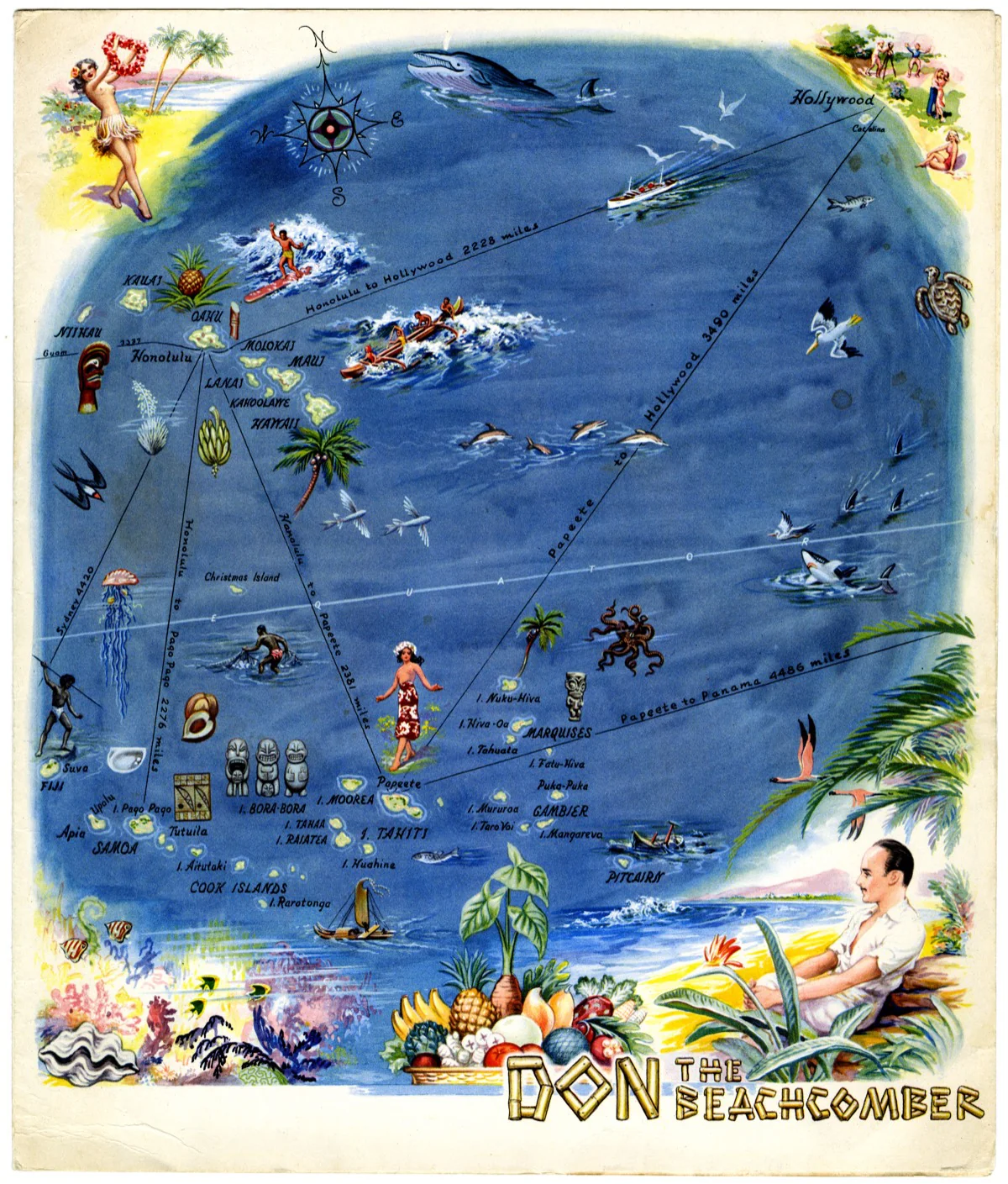
The Hollywood wartime menu: a hand-painted Pacific chart on the front, the original tropical dish list on the back. Held in the California Historical Society Collection at Stanford University Libraries. A copyright renewal search across two independent record sets, with a control row to prove the corpus was not simply silent.
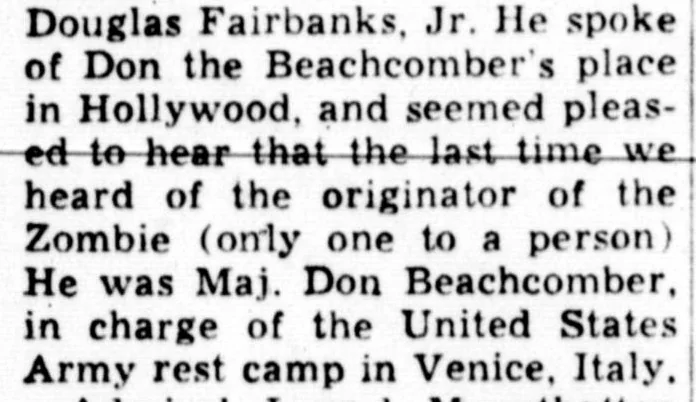
The V-J edition column naming Don the Beachcomber as the originator of the Zombie, and printing the two-drink limit as fact. The newspaper never renewed its issue copyright, but the article is syndicated NEA copy and the syndicate was renewing contributions from June 1945. Not cleared, and the record explains why we quote it rather than reproduce it.
A record is added when an object is reproduced at any size beyond a passing citation. Where a determination has not been made, the entry says so rather than implying one. Nothing in this archive is legal advice.